

If “feedback is a gift”, why do leaders struggle to deliver it effectively? And why isn’t it acted upon? It’s not a knowledge problem. It's a formulation one.
Most feedback is either too vague or too soft to change behaviour – even in organisations that pride themselves on a strong feedback culture.
Join us on 27th October, as Fabienne Astier, Global Head of Talent at Ipsen, shares with MindGym Co-Founder Dr Sebastian Bailey how Ipsen built an AI-enabled approach to make leaders' feedback clearer, fairer and more consistent — without losing the human judgement that makes it actionable.
-
Why feedback stays vague or overly positive, even with a strong feedback culture in place
-
How Ipsen's AI-enabled approach assesses feedback against clear criteria — context, achievements, behaviours, outcomes, balance and future action
-
What it takes to introduce AI as a coaching tool, not a surveillance one — and get leaders on board
Sixty minutes. Evidence-based. Free of charge.
If your leaders mean well but their feedback isn't directly contributing to driving performance, this one's for you.
Featuring
Fabienne Astier
Global Head of Talent, Ipsen
Hosted by

Sebastian Bailey
Co-Founder and President, MindGym

Related Content
HR's bitter pill
Most HR leaders know the pattern: the strategic workforce planning spreadsheet, the 40/30 resource allocation exercise, the onboarding programme that drags on for months, the leadership programme everyone defends and no one can prove works.
In this 60-minute conversation with Sebastian Bailey and Hein Knaapen, Tripti Jha explains the specific choices she made, the outcomes that followed, and what other CHROs can take from the reset.
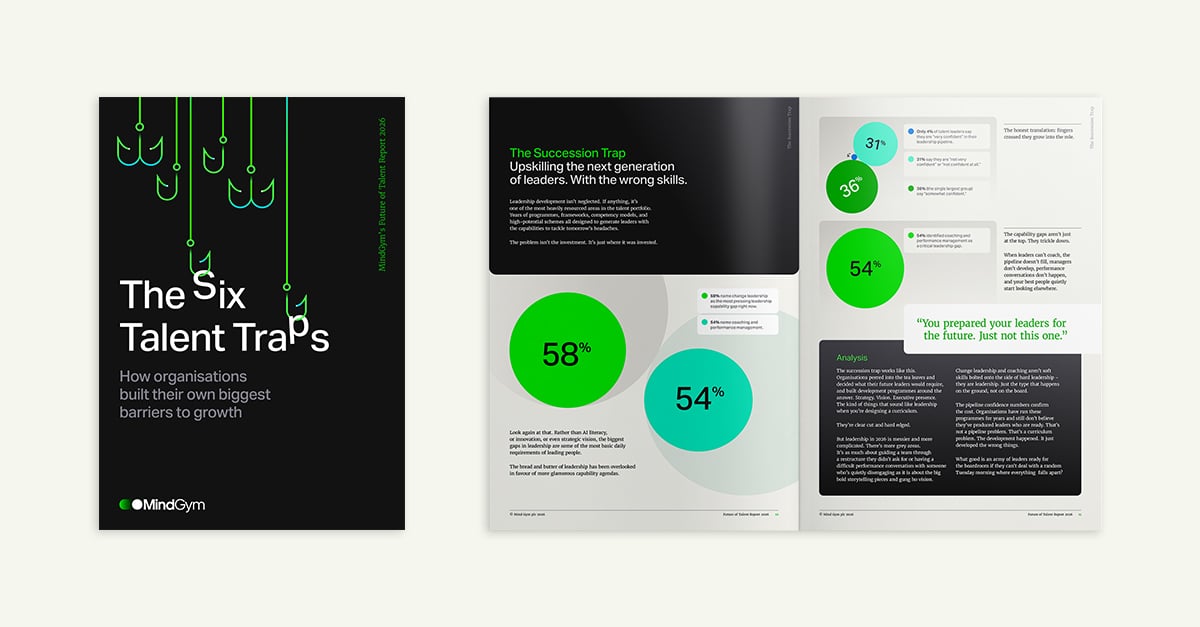
Report: The Six Talent Traps
How new pressures turned yesterday’s strengths into today’s constraints.
The toughest problems facing talent leaders in 2026 aren't external pressures like AI disruption or economic uncertainty. It's what happens when those pressures collide with the internal structures, systems, and processes built over the last decade.